
A Frisco homeowner and risk advisor shares the real number buried in his own policy — and what he did about it.
I want to start with a number: $11,280.
That’s how much I’d pay out of my own pocket before my home insurance covers a single dollar of hail damage. My house is insured for $564,000 with a major carrier, and my policy puts the first 2% of any wind or hail damage on me. Two percent of $564,000 is $11,280.
Most DFW homeowners have a hail damage deductible Texas homeowners rarely talk about — buried in their policy and easy to overlook until a storm makes it real. Chances are you don’t know your exact number until a roofer shows up after a storm. As a risk advisor based in North Texas, this post shows exactly what I did about it — including the policy I bought, what it pays, and what it costs.
Why Your Wind and Hail Deductible in Texas Keeps Going Up
DFW gets hammered by hailstorms. Denton, Collin, Tarrant, and Dallas counties are some of the most hail-damaged areas in the entire country. Insurance companies have been paying out massive amounts of money here for years — and they’ve responded by making homeowners cover more of the cost themselves.
Ten years ago, most Texas home insurance policies had a flat amount you had to pay first — like $1,000 or $2,500 no matter what your house was worth. Insurers called this a flat dollar deductible — a fixed number that never changed based on home value.
Today, most policies in North Texas work differently. Instead of a flat number, your out-of-pocket amount is now a percentage of your home’s insured value. That means the more your home is worth, the more you’re on the hook for after a storm. Most policies in this area sit between 1.5% and 2%, but some are as high as 5%.
Here’s what a 2% rate looks like for homes across Collin County:
- Home insured at $400,000 → you pay the first $8,000
- Home insured at $500,000 → you pay the first $10,000
- Home insured at $564,000 (my home) → you pay the first $11,280
- Home insured at $650,000 → you pay the first $13,000
Why Your Hail Damage Deductible Texas Carriers Assign Keeps Growing
Three things caused this shift — and none of them are going to change anytime soon:
Too many claims, too much money paid out. One big hailstorm in DFW can create thousands and thousands of claims across just a few zip codes. Insurance companies have been paying out more money here than almost anywhere else in the country. So they changed the rules to make homeowners share more of the cost.
A lot of fake and inflated claims. Some roofers have been filing claims for damage that was already there before the storm, or making small damage look like big damage to get a full roof replacement paid for. This has cost insurance companies billions of dollars. When they lose money on fraud, they raise costs for everyone — including honest homeowners like you.
Insurance companies pay more for their own coverage now. This part surprises most people. Insurance companies also buy insurance — it’s called reinsurance — to protect themselves from huge loss years. As storms have gotten more frequent and more expensive in Texas, that protection has gotten a lot more expensive. Insurance companies pass every dollar of that increase straight to you.
The bottom line: you’re carrying thousands of dollars more risk on your home today than you were five years ago. Most people don’t realize this until a storm makes it real. You can verify current storm data for your area anytime through NOAA, the federal agency that tracks weather events across the country.
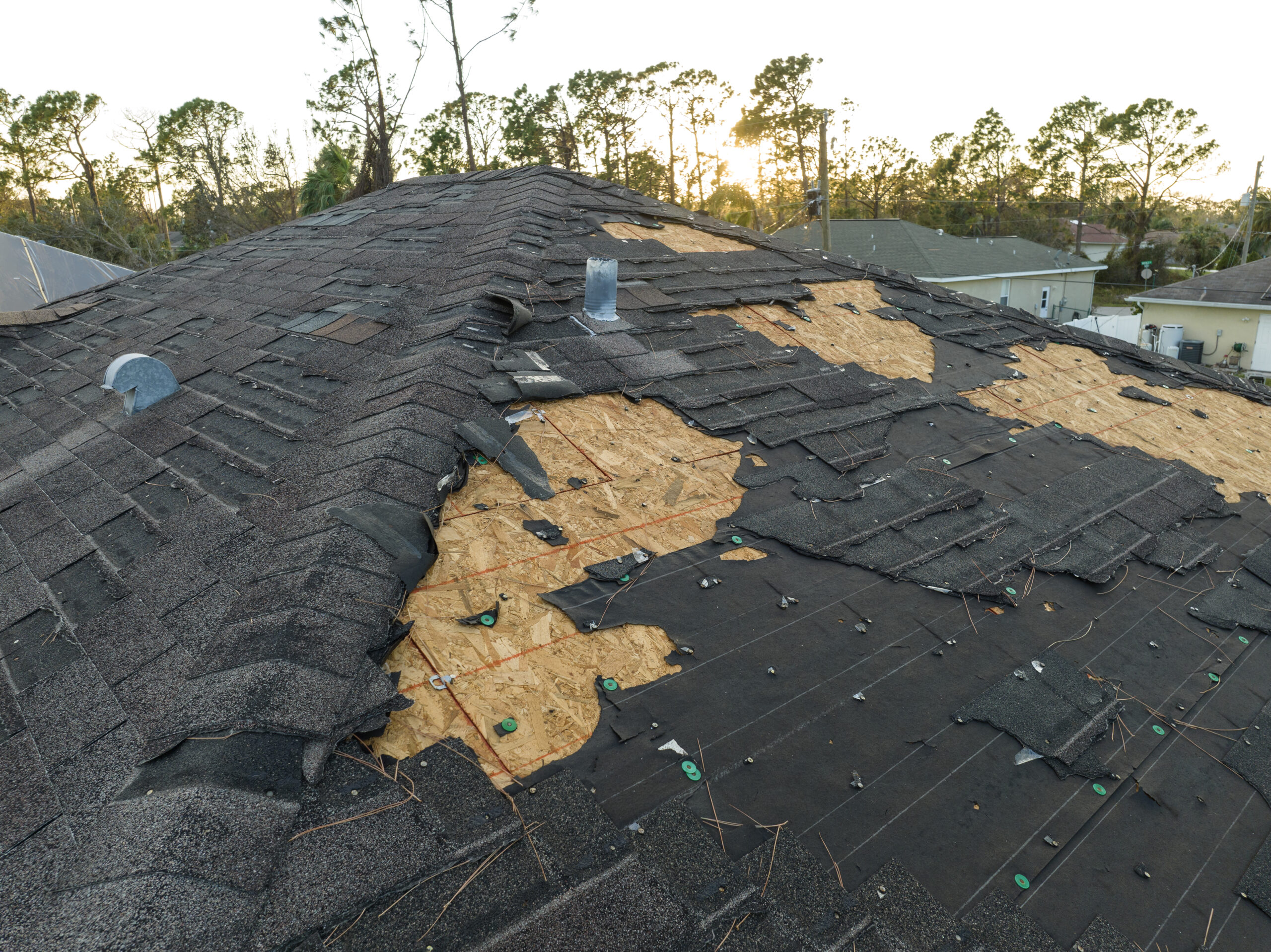
Storm Chasers: Why Roofers Knocking After a Storm Can Make Things Worse
After a big hailstorm in DFW, trucks start showing up fast. Sometimes within a few hours. Guys offering free roof inspections, promising they can “handle everything with your insurance” and get you a brand new roof for little or nothing out of your pocket.
These are called storm chasers. They follow major hail events from city to city. Not every one of them is dishonest, but the way they do business puts you in a bad spot — especially when you have a high out-of-pocket amount.
Here’s the typical move: They get on your roof, tell you there’s serious damage, and push you to file a claim right away. Sometimes they’ll hand you a paper to sign — called an Assignment of Benefits — that basically hands over control of your insurance claim to them. Once you sign that, they talk to your insurance company directly. You’re mostly out of the picture.
Why Your Hail Damage Deductible Makes Storm Chasers Dangerous
Here’s the problem with that when you have a high out-of-pocket amount:
Let’s say the storm caused $8,000 worth of damage to your roof. But your out-of-pocket amount is $11,280. Since the damage didn’t reach your threshold, your insurance company pays nothing. The full $8,000 comes out of your pocket.
Why a Filed Claim Can Still Cost You Nothing — and Still Hurt You
But here’s what makes it worse: that filed claim now shows up on your insurance record — even though you got zero dollars from it. Insurance companies look at how many claims you’ve filed when they decide what to charge you next year. File too many claims, even ones that pay nothing, and your carrier will raise your rates. In some cases the company will simply decline to renew your policy.
So you got nothing from the claim, and it may still cost you money going forward.
Three things to know about your rights as a homeowner:
- No roofer can make you file a claim. That decision is yours and yours alone.
- Texas law does not require you to file a claim just because a contractor says you should.
- Signing that Assignment of Benefits form gives the contractor a lot of power over your claim. Don’t sign anything before you’ve talked to your own insurance agent.
If a contractor is rushing you to sign something before you’ve talked to anyone else, that rush is a sales move. It is not a legal deadline. The Texas Department of Insurance has resources to help homeowners understand their rights after a storm.
What to Do After a Storm Before You Make Any Calls
The smartest move after a hailstorm is to get informed before you do anything else. Here’s a simple order of steps:
Step 1: Walk around your home and look for real damage.
Look for broken windows, missing shingles, dented gutters, damaged trim, and dents on your AC unit or any metal surfaces. These are signs of serious damage. Small surface dents that don’t cause any leaks or structural problems usually don’t meet the bar for an insurance payout.
Step 2: Take photos of everything right away.
Use your phone and make sure each photo has a date and time on it. Do this whether you plan to file a claim or not. It’s your proof of what the storm actually did.
Step 3: Get a cost estimate from a contractor you found yourself.
Before calling your insurance company, find a licensed roofing contractor on your own — not the one who knocked on your door. Get a written estimate of what repairs would actually cost. That number is what everything else is based on.
The Two Steps Most Homeowners Skip
Step 4: Compare that estimate to your out-of-pocket amount.
Find the wind and hail section of your insurance policy. Multiply your home’s insured value by your percentage. That’s how much you’d pay before insurance helps. If the repair cost is less than that number, filing a claim is probably going to hurt you more than help you.
Step 5: Call your insurance agent before you do anything else.
Your agent works for you. Call them first. Ask them: how much would I pay out of pocket on this? Would filing a claim change what I pay next year? Is it even worth filing? That conversation is free, and it can save you a lot of money.
What I Actually Did — and What It Costs
After I did this math on my own policy, I bought a second, separate policy called Sola Wind and Hail Crisis Coverage. It’s backed by Lloyd’s of London, one of the oldest and most well-known insurance markets in the world.
Here’s the key thing that makes it different from regular home insurance: it doesn’t require someone to inspect your roof to pay you. Instead, it uses official government weather data from NOAA — the same agency that tracks hurricanes and tornadoes — to determine whether a storm hit your area hard enough to qualify. If it did, Sola contacts you and starts the process. No inspector shows up at your house, and you choose whether to involve a contractor at all.
Here’s exactly what my policy pays, depending on storm type and severity:
Straight-line wind (strong thunderstorm winds that don’t rotate like a tornado):
- 86–110 MPH: $3,000
- 111–135 MPH: $5,000
- 136–165 MPH: $10,000
- 166–199 MPH: $12,000
- 200+ MPH: $12,000
Tornado (rated on the EF scale — EF0 being weakest, EF5 being strongest):
- EF0 or EF1: $3,000
- EF2: $5,000
- EF3: $10,000
- EF4 or EF5: $12,000
Hail:
- If NOAA data shows a 65% or higher chance that my home was damaged by hail: $12,000
Most I can receive in a year: $12,000.
What I pay for this coverage per year: $1,306 (that includes all fees and taxes).
Here’s why that math works for me: my policy with a major carrier makes me responsible for the first $11,280 after any wind or hail event. The Sola policy pays up to $12,000 when a major storm hits my area. For $1,306 a year, I’ve basically covered my entire out-of-pocket exposure on big storms.
How the Payout Process Works
After a storm, Sola checks the NOAA weather data. If my home is in the storm’s impact area, they reach out to me. I then have 60 days to fill out two short forms — one to report the storm and one to confirm my home actually had damage. Damage means real structural issues: leaks, holes in the roof, broken windows. Not just surface dents.
Once that’s done, Sola sends the money directly to me. Not to my roofer. Not to my mortgage company. To me. I decide how to use it — whether that’s paying a contractor, covering my out-of-pocket amount on a claim with my main carrier, or something else entirely.
What This Policy Does Not Cover
- There’s a 5-day wait when the policy starts. If a storm hits in the first five days after you buy it, it won’t count. Plan ahead — don’t wait until storm season is already here.
- It pays once per year, for the biggest storm. If two big storms happen within 30 days of each other, they’re combined and you get paid based on the worse one. You can’t collect twice in one year.
- Your home has to have real damage. That means leaks, holes, or broken windows from the storm. Surface scuffs and minor dents that don’t cause actual structural problems don’t qualify.
- It doesn’t cover named hurricanes. If the storm has an official name from the National Hurricane Center, this policy doesn’t apply.
- This is not regular home insurance. It’s a separate add-on policy, issued through Lloyd’s of London. It’s not part of the Texas state insurance safety net that protects you if a regular insurance company goes out of business. Lloyd’s has been around since 1686 and has a strong track record, but that’s a detail worth knowing.
Is This Right for You?
I don’t think every homeowner needs this. Here’s how I think about it:
This type of policy makes the most sense if your out-of-pocket amount after a storm would be $5,000 or more. For most homes in Frisco, Allen, McKinney, Prosper, or Celina that are insured at $400,000 or above with a 2% rate, you’re probably in that zone. At 3% or higher, the gap is even bigger.
It also makes sense if you want to have options after a storm that don’t involve filing a claim on your main policy. When you have cash in hand, you’re not stuck. You can take your time, get real bids, and decide what’s best — instead of being pressured into filing quickly because you don’t have another way to pay for repairs.
One thing worth knowing: this policy sits completely on top of whatever home insurance you already have. You don’t switch carriers. You don’t change anything about your existing coverage. Your primary policy stays exactly as it is — Sola simply fills the gap between a storm and the point where your main policy kicks in. Think of it as a hail damage deductible buffer that pays you directly before your main carrier ever gets involved.
When It Probably Isn’t Necessary
If your out-of-pocket amount is a flat $1,000 or $2,000 and you have savings to cover it, this probably isn’t necessary. The point is to match what you buy to what you actually need — not to stack up policies.
When Should You File a Claim — and When Shouldn’t You?
Filing probably makes sense when:
- The repair cost is clearly much more than your out-of-pocket amount.
- There’s damage inside your home, or something that needs to be fixed right away to prevent more damage.
- You have clear proof the storm caused the damage.
Think twice before filing when:
- The repair cost is close to or less than your out-of-pocket amount.
- The damage is mostly cosmetic — it looks bad but doesn’t affect how the house works.
- A roofer is the one pushing you to file, and you haven’t gotten your own estimate yet.
- You haven’t called your insurance agent to talk it through first.
In this market, your insurance record matters. The more claims you file, the more likely your rates go up — or your company decides not to cover you anymore. Keeping a clean record has real financial value over time.
Frequently Asked Questions
What happens if my storm damage is less than my wind and hail deductible?
Your insurance company pays nothing — you cover the full repair cost yourself. And filing a claim can actually make things worse, because it shows up on your insurance record and may cause your rates to go up at renewal, even though you got zero money. A separate policy like Sola Wind and Hail Crisis Coverage can help cover that cost without touching your main insurance record at all.
How long do I have to file a wind or hail claim in Texas?
For your main home insurance, Texas law generally gives you one year from the date of the storm, though your specific policy may be different. For a Sola add-on policy, the window is shorter — you have 60 days from when Sola contacts you to confirm your home was in the storm’s impact area. After that window, you can’t collect for that storm, so don’t sit on it.
Can a roofing contractor make me file an insurance claim?
No. That decision is entirely yours. No contractor has the legal power to force you to file. Be careful about signing an Assignment of Benefits form — it hands control of your insurance claim to the contractor. Don’t sign anything until you’ve talked to your own insurance agent first.
What is a wind and hail buy-down policy?
It’s a separate, add-on policy that covers the amount you’d have to pay out of pocket before your main home insurance kicks in after a storm. Sola’s version uses official government weather data to decide if a storm qualifies — no one has to inspect your roof. If a qualifying storm hits your area, you get paid directly. You use that money however makes the most sense for your situation.
Will filing a small home insurance claim raise my rates in Texas?
It can. Insurance companies in Texas are allowed to look at how many claims you’ve filed when they set your price at renewal. Even claims that paid you nothing can count against you. Filing too many small claims can lead to higher rates or even losing your coverage. That’s one big reason to have a separate add-on policy for smaller storm damage — so your main insurance record stays clean.
How does the 60-day window work on a Sola policy?
After a storm, Sola checks official weather data and contacts you if your home was in the impact zone. From that point, you have 60 days to complete two short forms — one confirming the storm happened and one confirming your home had real damage like leaks, holes, or broken windows. Miss the 60-day window, and you can’t collect for that storm. Once Sola reaches out, act on it.
The Bottom Line
That hail damage deductible Texas was sitting there the whole time — I just didn’t have a plan for it. The Sola policy I added pays up to $12,000 when a serious storm hits my area. I pay $1,306 a year for that. For my situation, that made complete sense.
Insurance companies have quietly shifted a lot of storm risk back onto homeowners over the last several years. Most people don’t find out their number until a roofer is standing in their driveway. If you’d rather know before the storm —
A Frisco homeowner and risk advisor shares the real number buried in his own policy — and what he did about it.
I want to start with a number: $11,280.
That’s how much I’d pay out of my own pocket before my home insurance covers a single dollar of hail damage. My house is insured for $564,000 with a major carrier, and my policy puts the first 2% of any wind or hail damage on me. Two percent of $564,000 is $11,280.
Most DFW homeowners have a wind and hail deductible in Texas just like this buried in their policy. Most don’t know what it is until a roofer shows up after a storm. This post shows exactly what I did about it — including the policy I bought, what it pays, and what it costs.
Why Your Wind and Hail Deductible in Texas Keeps Going Up
DFW gets hammered by hailstorms. Denton, Collin, Tarrant, and Dallas counties are some of the most hail-damaged areas in the entire country. Insurance companies have been paying out massive amounts of money here for years — and they’ve responded by making homeowners cover more of the cost themselves.
Ten years ago, most Texas home insurance policies had a flat amount you had to pay first — like $1,000 or $2,500 no matter what your house was worth. That’s called a flat dollar amount you pay before insurance kicks in — your deductible.
Today, most policies in North Texas work differently. Instead of a flat number, your out-of-pocket amount is now a percentage of your home’s insured value. That means the more your home is worth, the more you’re on the hook for after a storm. Most policies in this area sit between 1.5% and 2%, but some are as high as 5%.
Here’s what a 2% rate looks like for homes across Collin County:
- Home insured at $400,000 → you pay the first $8,000
- Home insured at $500,000 → you pay the first $10,000
- Home insured at $564,000 (my home) → you pay the first $11,280
- Home insured at $650,000 → you pay the first $13,000
Three things caused this shift — and none of them are going to change anytime soon:
Too many claims, too much money paid out. One big hailstorm in DFW can create thousands and thousands of claims across just a few zip codes. Insurance companies have been paying out more money here than almost anywhere else in the country. So they changed the rules to make homeowners share more of the cost.
A lot of fake and inflated claims. Some roofers have been filing claims for damage that was already there before the storm, or making small damage look like big damage to get a full roof replacement paid for. This has cost insurance companies billions of dollars. When they lose money on fraud, they raise costs for everyone — including honest homeowners like you.
Insurance companies pay more for their own coverage now. This part surprises most people. Insurance companies also buy insurance — it’s called reinsurance — to protect themselves from huge loss years. As storms have gotten more frequent and more expensive in Texas, that protection has gotten a lot more expensive. Those costs get passed straight to you.
The bottom line: you’re carrying thousands of dollars more risk on your home today than you were five years ago. Most people don’t realize this until a storm makes it real. You can verify current storm data for your area anytime through NOAA, the federal agency that tracks weather events across the country.
Storm Chasers: Roofers Knocking After a Storm
After a big hailstorm in DFW, trucks start showing up fast. Sometimes within a few hours. Guys offering free roof inspections, promising they can “handle everything with your insurance” and get you a brand new roof for little or nothing out of your pocket.
These are called storm chasers. They follow major hail events from city to city. Not every one of them is dishonest, but the way they do business puts you in a bad spot — especially when you have a high out-of-pocket amount.
Here’s the typical move: They get on your roof, tell you there’s serious damage, and push you to file a claim right away. Sometimes they’ll hand you a paper to sign — called an Assignment of Benefits — that basically hands over control of your insurance claim to them. Once you sign that, they talk to your insurance company directly. You’re mostly out of the picture.
Here’s the problem with that when you have a high out-of-pocket amount:
Let’s say the storm caused $8,000 worth of damage to your roof. But your out-of-pocket amount is $11,280. Your insurance company pays nothing — because the damage didn’t reach your threshold. You still have to pay the $8,000 yourself.
But here’s what makes it worse: that filed claim now shows up on your insurance record — even though you got zero dollars from it. Insurance companies look at how many claims you’ve filed when they decide what to charge you next year. File too many claims, even ones that pay nothing, and your rates can go up. In some cases they can decide not to renew your policy at all.
So you got nothing from the claim, and it may still cost you money going forward.
Three things to know about your rights as a homeowner:
- No roofer can make you file a claim. That decision is yours and yours alone.
- Texas law does not require you to file a claim just because a contractor says you should.
- Signing that Assignment of Benefits form gives the contractor a lot of power over your claim. Don’t sign anything before you’ve talked to your own insurance agent.
If a contractor is rushing you to sign something before you’ve talked to anyone else, that rush is a sales move. It is not a legal deadline. The Texas Department of Insurance has resources to help homeowners understand their rights after a storm.
What to Do After a Storm Before You Make Any Calls
The smartest move after a hailstorm is to get informed before you do anything else. Here’s a simple order of steps:
Step 1: Walk around your home and look for real damage.
Look for broken windows, missing shingles, dented gutters, damaged trim, and dents on your AC unit or any metal surfaces. These are signs of serious damage. Small surface dents that don’t cause any leaks or structural problems usually don’t meet the bar for an insurance payout.
Step 2: Take photos of everything right away.
Use your phone and make sure each photo has a date and time on it. Do this whether you plan to file a claim or not. It’s your proof of what the storm actually did.
Step 3: Get a cost estimate from a contractor you found yourself.
Before calling your insurance company, find a licensed roofing contractor on your own — not the one who knocked on your door. Get a written estimate of what repairs would actually cost. That number is what everything else is based on.
Step 4: Compare that estimate to your out-of-pocket amount.
Find the wind and hail section of your insurance policy. Multiply your home’s insured value by your percentage. That’s how much you’d pay before insurance helps. If the repair cost is less than that number, filing a claim is probably going to hurt you more than help you.
Step 5: Call your insurance agent before you do anything else.
Your agent works for you. Call them first. Ask them: how much would I pay out of pocket on this? Would filing a claim change what I pay next year? Is it even worth filing? That conversation is free, and it can save you a lot of money.
What I Actually Did — and What It Costs
After I did this math on my own policy, I bought a second, separate policy called Sola Wind and Hail Crisis Coverage. It’s backed by Lloyd’s of London, one of the oldest and most well-known insurance markets in the world.
Here’s the key thing that makes it different from regular home insurance: it doesn’t require someone to inspect your roof to pay you. Instead, it uses official government weather data from NOAA — the same agency that tracks hurricanes and tornadoes — to determine whether a storm hit your area hard enough to qualify. If it did, Sola contacts you and starts the process. No inspector coming to your house. No contractor involved unless you choose one.
Here’s exactly what my policy pays, depending on storm type and severity:
Straight-line wind (strong thunderstorm winds that don’t rotate like a tornado):
- 86–110 MPH: $3,000
- 111–135 MPH: $5,000
- 136–165 MPH: $10,000
- 166–199 MPH: $12,000
- 200+ MPH: $12,000
Tornado (rated on the EF scale — EF0 being weakest, EF5 being strongest):
- EF0 or EF1: $3,000
- EF2: $5,000
- EF3: $10,000
- EF4 or EF5: $12,000
Hail:
- If NOAA data shows a 65% or higher chance that my home was damaged by hail: $12,000
Most I can receive in a year: $12,000.
What I pay for this coverage per year: $1,306 (that includes all fees and taxes).
Here’s why that math works for me: my policy with a major carrier makes me responsible for the first $11,280 after any wind or hail event. The Sola policy pays up to $12,000 when a major storm hits my area. So for $1,306 a year, I’ve basically covered my entire out-of-pocket exposure on big storms.
How you actually get paid:
After a storm, Sola checks the NOAA weather data. If my home is in the storm’s impact area, they reach out to me. I then have 60 days to fill out two short forms — one to report the storm and one to confirm my home actually had damage. Damage means real structural issues: leaks, holes in the roof, broken windows. Not just surface dents.
Once that’s done, Sola sends the money directly to me. Not to my roofer. Not to my mortgage company. To me. I decide how to use it — whether that’s paying a contractor, covering my out-of-pocket amount on a claim with my main carrier, or something else entirely.
Important things to know before you buy this type of policy:
- There’s a 5-day wait when the policy starts. If a storm hits in the first five days after you buy it, it won’t count. Plan ahead — don’t wait until storm season is already here.
- It pays once per year, for the biggest storm. If two big storms happen within 30 days of each other, they’re combined and you get paid based on the worse one. You can’t collect twice in one year.
- Your home has to have real damage. That means leaks, holes, or broken windows from the storm. Surface scuffs and minor dents that don’t cause actual structural problems don’t qualify.
- It doesn’t cover named hurricanes. If the storm has an official name from the National Hurricane Center, this policy doesn’t apply.
- This is not regular home insurance. It’s a separate add-on policy, issued through Lloyd’s of London. It’s not part of the Texas state insurance safety net that protects you if a regular insurance company goes out of business. Lloyd’s has been around since 1686 and has a strong track record, but that’s a detail worth knowing.
Is This Right for You?
I don’t think every homeowner needs this. Here’s how I think about it:
This type of policy makes the most sense if your out-of-pocket amount after a storm would be $5,000 or more. For most homes in Frisco, Allen, McKinney, Prosper, or Celina that are insured at $400,000 or above with a 2% rate, you’re probably in that zone. At 3% or higher, the gap is even bigger.
It also makes sense if you want to have options after a storm that don’t involve filing a claim on your main policy. When you have cash in hand, you’re not stuck. You can take your time, get real bids, and decide what’s best — instead of being pressured into filing quickly because you don’t have another way to pay for repairs.
One thing worth knowing: this policy sits completely on top of whatever home insurance you already have. You don’t have to switch carriers! You don’t change anything about your existing coverage. Your primary policy stays exactly as it is — Sola simply fills the gap between a storm and the point where your main policy kicks in.
When Should You File a Claim — and When Shouldn’t You?
Filing probably makes sense when:
- The repair cost is clearly much more than your out-of-pocket amount.
- There’s damage inside your home, or something that needs to be fixed right away to prevent more damage.
- You have clear proof the storm caused the damage.
Think twice before filing when:
- The repair cost is close to or less than your out-of-pocket amount.
- The damage is mostly cosmetic — it looks bad but doesn’t affect how the house works.
- A roofer is the one pushing you to file, and you haven’t gotten your own estimate yet.
- You haven’t called your insurance agent to talk it through first.
In this market, your insurance record matters. The more claims you file, the more likely your rates go up — or your company decides not to cover you anymore. Keeping a clean record has real financial value over time.
Frequently Asked Questions
What happens if my storm damage is less than my wind and hail deductible?
Your insurance company pays nothing — you cover the full repair cost yourself. And filing a claim can actually make things worse, because it shows up on your insurance record and may cause your rates to go up at renewal, even though you got zero money. A separate policy like Sola Wind and Hail Crisis Coverage can help cover that cost without touching your main insurance record at all.
How long do I have to file a wind or hail claim in Texas?
For your main home insurance, Texas law generally gives you one year from the date of the storm, though your specific policy may be different. For a Sola add-on policy, the window is shorter — you have 60 days from when Sola contacts you to confirm your home was in the storm’s impact area. After that window, you can’t collect for that storm, so don’t sit on it.
Can a roofing contractor make me file an insurance claim?
No. That decision is entirely yours. No contractor has the legal power to force you to file. Be careful about signing an Assignment of Benefits form — it hands control of your insurance claim to the contractor. Don’t sign anything until you’ve talked to your own insurance agent first.
What is a wind and hail buy-down policy?
It’s a separate, add-on policy that covers the amount you’d have to pay out of pocket before your main home insurance kicks in after a storm. Sola’s version uses official government weather data to decide if a storm qualifies — no one has to inspect your roof. If a qualifying storm hits your area, you get paid directly. You use that money however makes the most sense for your situation.
Will filing a small home insurance claim raise my rates in Texas?
It can. Insurance companies in Texas are allowed to look at how many claims you’ve filed when they set your price at renewal. Even claims that paid you nothing can count against you. Filing too many small claims can lead to higher rates or even losing your coverage. That’s one big reason to have a separate add-on policy for smaller storm damage — so your main insurance record stays clean.
How does the 60-day window work on a Sola policy?
After a storm, Sola checks official weather data and contacts you if your home was in the impact zone. From that point, you have 60 days to complete two short forms — one confirming the storm happened and one confirming your home had real damage like leaks, holes, or broken windows. Miss the 60-day window, and you can’t collect for that storm. Once Sola reaches out, act on it.
The Bottom Line
My home insurance with a major carrier made me responsible for $11,280 before it would pay anything after a hailstorm. The Sola policy I added pays up to $12,000 when a serious storm hits my area. I pay $1,306 a year for that. For my situation, that made complete sense.
Here’s the bigger picture: insurance companies in DFW have quietly shifted a lot of storm risk back onto homeowners over the last several years. Most people don’t realize how much until a storm shows up and a roofer starts talking about filing a claim. Have a plan before the storm hits, so that you stay in control. If you don’t, someone else usually ends up making decisions for you.
If you want to find out what your actual number is, and whether a policy like this would cover your gap, and whether the cost makes sense for your home — that’s a conversation I’m happy to have. No pressure, no pitch.
Find Your Number Right Now, and Address Your Wind and Hail Deductible!