.png?width=500&height=136&name=4J%20commercial%20insurance%20broker%5B1%5D%20(1).png)
Precision Machining Insurance in Texas
A precision machining operation’s largest loss usually is not the one that happens on the shop floor. It is the part that already shipped. Whether the shop or the customer carries responsibility for that part turns first on who specified it — a shop cutting to a customer print occupies a different position than a shop that engineered the geometry itself — and second on what the supply agreement says about defect, recall and indemnity.
Guarding, lockout/tagout and forklift training govern the injuries that happen inside the building, and those obligations are set by federal standards that apply regardless of what any policy says. The exposures that follow a finished part out the door are governed by contract and by the shop’s position in the lifecycle. Both matter. They are underwritten differently and they fail differently.
What decides a precision machining shop’s exposure
- Chain position Cutting to a customer print and designing the part are different exposures, even when the finished component is identical.
- The contract Defect, recall, indemnity and limitation-of-liability terms in a supply agreement often decide more than any single coverage line does.
- Machine guarding Guarding against point of operation, ingoing nip points, rotating parts and flying chips is required by federal standard, not by contract.
- Documented energy control Lockout/tagout procedures must be developed, documented and inspected periodically — the documentation is the evidence.
- Bottleneck equipment A shop’s income exposure often concentrates in one or two machines rather than in the building.
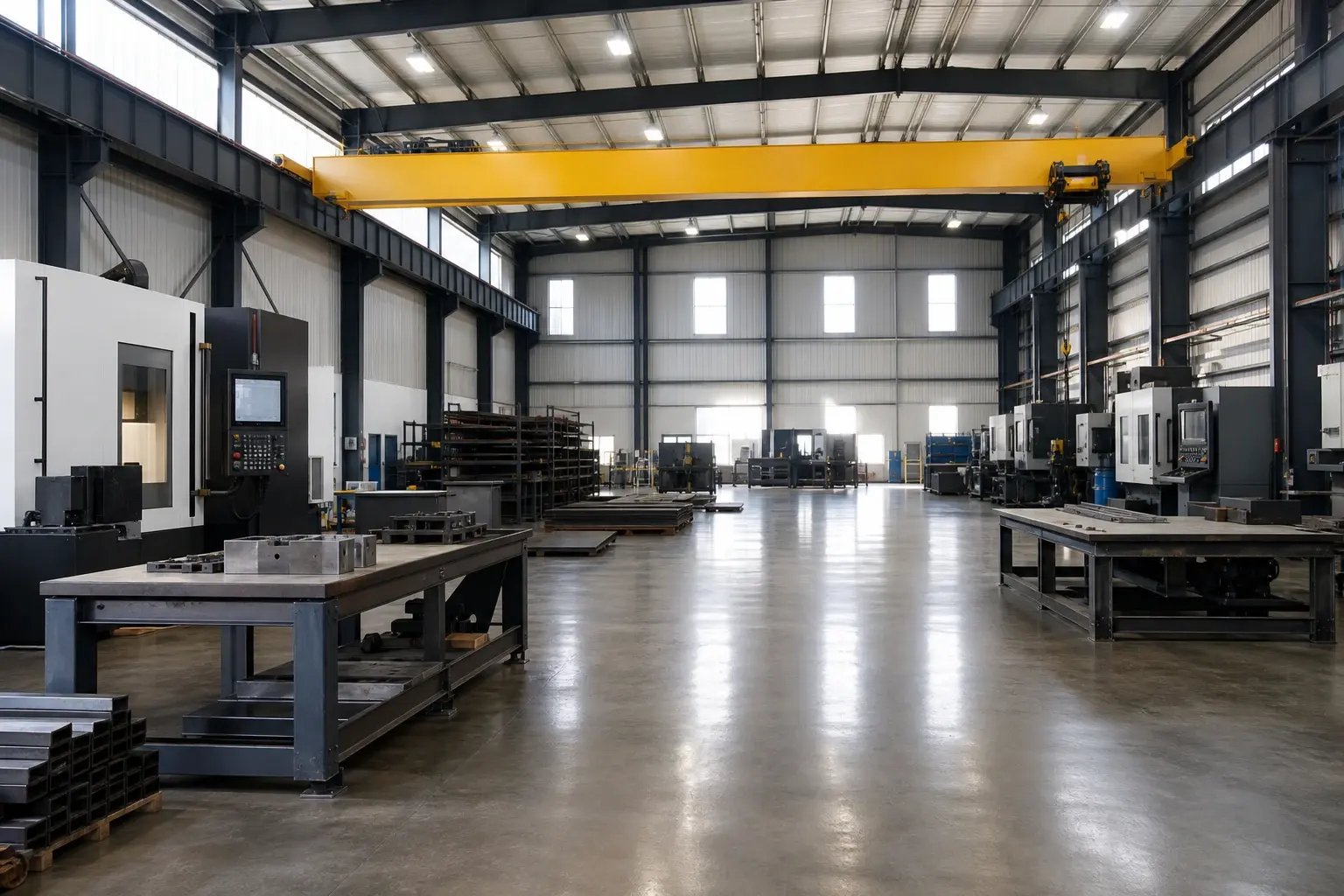
Precision machining sits at a specific point in the manufacturing lifecycle: component manufacturing and fabrication, upstream of assembly and well upstream of the customer. That position is what determines the shop’s exposure, and it is why two shops producing an identical part can carry entirely different risk.
A shop cutting to a customer’s print has been handed the geometry, the material callout and the tolerances. Its obligation is conformance, and its defense — if a finished component is later blamed for a failure — is the inspection record showing the part met the print it was given. A shop that engineered the part itself has taken on the design decision, and a design decision is a different thing to defend.
Neither position is safer in the abstract. What matters is that the shop knows which one it occupies on each job, and that its records and its contracts reflect that.
| Question | Build to customer print | Shop-specified design | |
|---|---|---|---|
| Who chose the geometry and tolerances | The customer | The shop | |
| Who is positioned to answer a design-defect allegation | Usually the customer, subject to contract | Usually the shop | |
| What a conforming-part defense rests on | Inspection records showing the part met print | Design rationale plus inspection records | |
| Where recall responsibility is typically settled | The supply agreement | The supply agreement | |
| What the shop must retain to prove either | First-article and in-process inspection data | Design files, revision history and inspection data |
Scroll the table horizontally on narrow screens.
The obligations that do not depend on the contract
- Guard the point of operation so no part of an operator’s body can enter the danger zone during the operating cycle.
- Guard ingoing nip points, rotating parts, flying chips and sparks — the categories the federal standard names.
- Develop and document energy control procedures, train affected employees, and inspect the procedures periodically.
- Train and evaluate every powered industrial truck operator, and re-evaluate performance at least once every three years.
- Retain first-article and in-process inspection records for as long as the parts they document remain in service.
- Read the customer supply agreement before the coverage conversation, not after a defect claim arrives.
Sources
Statutes and regulations
Regulatory text linked directly. Nothing on this page interprets policy language.
What a precision machining program actually has to answer
The parts that already shipped
The loss a machining shop tends to prepare for is the one it can see: a press brake injury, a fire, a machine down. The loss that tends to be larger is the component that left months ago and has since been installed in something that failed. By the time that claim arrives, the shop’s ability to respond depends entirely on records it either kept or did not.
Two questions decide the outcome. Did the part conform to the specification the shop was given? And what does the supply agreement say about who bears defect, recall and downstream liability? Neither question is answered by a certificate of insurance.
Contracts written before the coverage conversation
Precision machining shops routinely sign customer supply agreements containing indemnity obligations, warranty terms, recall participation clauses and limitation-of-liability provisions. Those terms allocate risk before any policy responds, and a shop can contractually accept an obligation broader than what it has arranged to cover. Reading the agreement first is not legal advice; it is the only way to know what the coverage has to reach.
Where a shop also installs, commissions or services what it makes, the analysis changes again — installation work introduces contractor exposures, additional-insured requirements and completed-operations questions that a pure manufacturing program may not contemplate.
Income concentrated in one machine
A machining shop’s revenue often depends on a small number of machines rather than on the building. When a five-axis center or a specific grinder is the only asset capable of holding a customer’s tolerance, the loss of that one machine can stop the revenue that the whole operation depends on, even though the building is untouched.
That concentration is worth identifying explicitly rather than assuming a property schedule captures it. Replacement lead times for machine tools are frequently measured in months, and the period of restoration is what the income exposure is actually measured against.
What the federal standards require regardless
Guarding and energy control are not negotiated. 29 CFR 1910.212 requires guarding against the point of operation, ingoing nip points, rotating parts and flying chips and sparks, and requires that point-of-operation guarding prevent any part of an operator’s body from entering the danger zone during the operating cycle. 29 CFR 1910.147 requires that energy control procedures be developed and documented, that employees be trained, and that the procedures be inspected periodically.
Documentation is the evidence. A shop that follows good practice but cannot show it is in a materially worse position after an injury than one that can.
Texas workers’ compensation is a decision, not a default
Texas does not require most private employers to carry workers’ compensation, although important exceptions apply — including certain private employers performing work under government contracts. An employer that elects not to subscribe loses the common-law defenses of contributory negligence, assumption of risk and fellow-servant negligence in an employee injury suit, and must notify each employee whether or not it carries coverage.
For a machining operation, where the injuries that do occur tend to be severe, that trade-off deserves a deliberate answer. Whether non-subscription is right for a specific employer is a legal and financial decision that belongs to counsel and to the employer’s own analysis.
Continue in the manufacturing ecosystem
Continue learning
- Insurance by manufacturing operation
- Manufacturing risk management
- Manufacturing coverage
- Manufacturing insurance glossary
Use a tool
Denton County machine shop insurance: Geographic detail for machining operations in Denton County.
Discuss the issue
Request a coverage audit: We read your supply agreements and your policies the way they will be read when a claim is filed.
Precision machining insurance questions
Does a shop that only cuts to a customer print still carry product liability exposure?
Yes. Building to a print narrows the design question but does not remove the shop from the chain. A claim can still allege that the part did not conform to the specification, that a process error introduced a defect, or that the shop should have recognised an obvious problem with what it was asked to make. What conformance work does is give the shop something concrete to answer with: inspection records showing the part met the print it was given.
What in a customer supply agreement matters most for a machining shop?
Indemnity scope, warranty duration, recall participation, and limitation of liability. Those four terms allocate risk before any policy is consulted, and a shop can accept an obligation in a contract that is broader than what it has arranged to cover. Reviewing the agreement is the starting point of the risk conversation, not a follow-up to it.
Is workers’ compensation required for a Texas machine shop?
Texas does not require most private employers to carry workers’ compensation, although important exceptions apply — including certain private employers performing work under government contracts. An employer that does not subscribe loses the contributory negligence, assumption of risk and fellow-servant defenses, and must notify each employee whether or not it carries coverage. Whether non-subscription is right for a specific employer is a legal and financial decision that belongs to counsel and to the employer’s own analysis.
How does bottleneck equipment change the income analysis?
When a single machine is the only asset capable of holding a customer’s tolerance, the operation’s revenue depends on that machine rather than on the building. Identifying which machines are genuinely irreplaceable, and what the realistic replacement lead time is, matters more than the schedule’s total insured value. Period of restoration is what an income exposure is measured against.
What changes if the shop also installs what it machines?
Installation work introduces contractor exposures, additional-insured requirements and completed-operations questions that a manufacturing-only program may not contemplate. The work is no longer finished when the part ships. That is a different set of questions and it deserves to be asked directly rather than assumed.
The part that already shipped is the one that decides the claim
Conformance records and the supply agreement are what answer it. Both are written long before anyone calls a broker.
Often relevant alongside this
- When cyber risk reaches the plant floor Covers operational technology exposure, not only office systems.
- What a ransomware shutdown looks like Worked examples including ransomware, vendor compromise and business interruption.
- Protecting the workforce The other way a production line stops.
- Keeping skilled people Benefits strategy as a retention lever in a tight machining labour market.
Back up
Related coverage
-
When cyber risk reaches the plant floor
Covers operational technology exposure, not only office systems.
-
What a ransomware shutdown looks like
Worked examples including ransomware, vendor compromise and business interruption.
-
Protecting the workforce
The other way a production line stops.
-
Keeping skilled people
Benefits strategy as a retention lever in a tight machining labour market.
Next step
-
Request a coverage audit →
Send the declarations pages. You get a written gap summary.