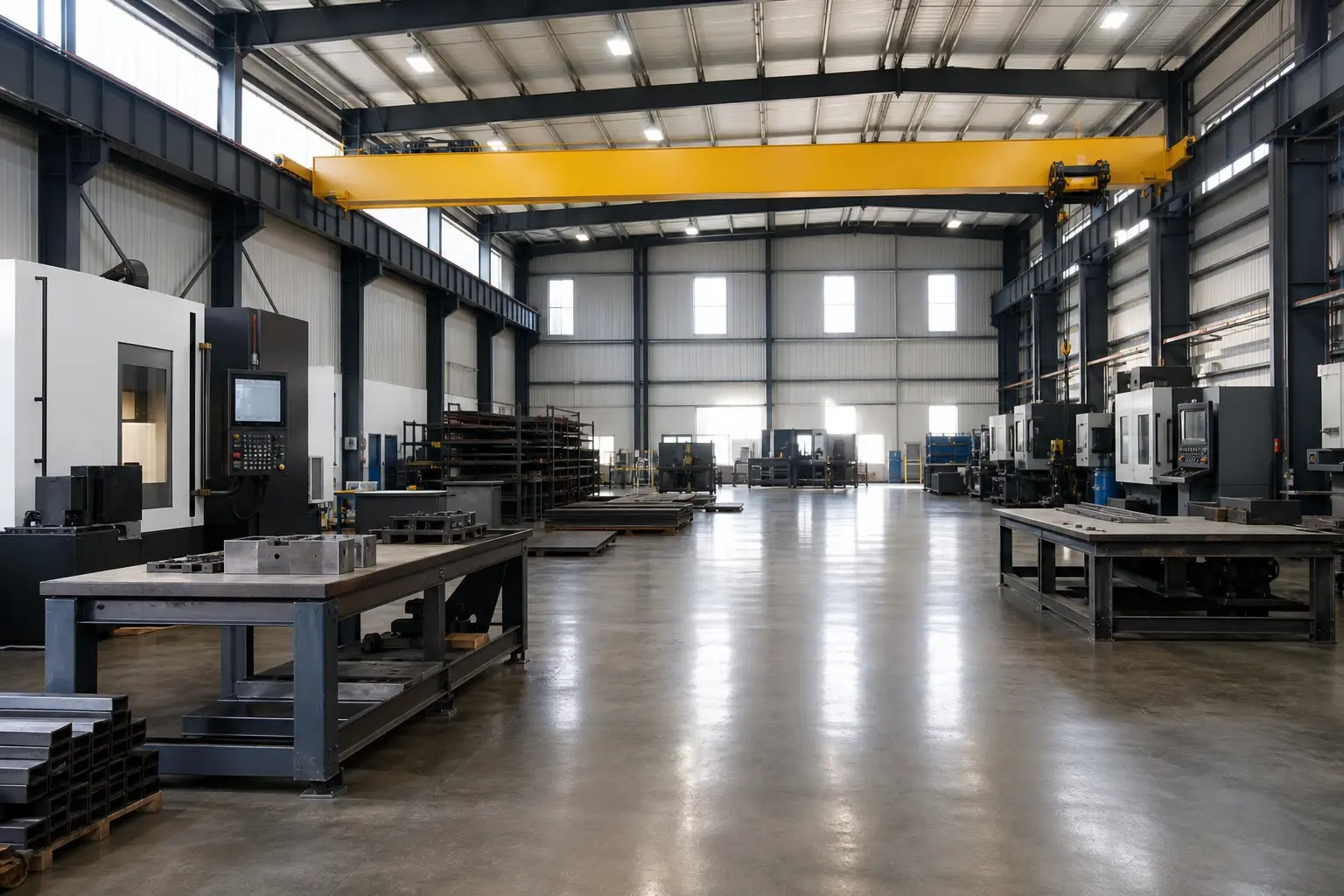
Manufacturing risk, organised by where responsibility actually transfers
Manufacturing is not a list of policies. It is an operating system in which people, machinery, inventory, products, suppliers, customers, contracts and technology all carry risk at the same time — and a single event usually touches several of them at once.
An electrical fault inside a production cell is not a property claim. It is potentially a property claim, an equipment breakdown claim, a business income claim, a dependent property question, an inventory valuation dispute and a customer contract problem, arriving together. Content that treats those as separate purchases does not help you.
This Resource Center is organised around that reality. Start with the cluster that matches your question: what your operation changes, which coverages exist because you manufacture, how risk moves through contracts and suppliers, or what happens when your machinery and your products are connected.
What changes when the operation changes. Machining, fabrication, electronics assembly, plastics and contract manufacturing each sit at a different point in the product lifecycle — and that position decides where responsibility transfers.
The coverages that exist because you manufacture — products-completed operations, recall, equipment breakdown, business income and contingent business interruption — and where the general commercial lines still govern.
Texas non-subscription, machine guarding and lockout/tagout, supply chain concentration, recall planning, valuation and the customer contracts that quietly move risk onto your balance sheet.
The most expensive manufacturing losses are rarely ambiguous about what happened. They are ambiguous about which policy answers. Property, equipment breakdown, business income and inland marine can each plausibly apply to the same event, and the causation language decides it. That argument is won or lost when the program is built, not when the claim is filed.
Technology and reference
Industry 4.0 and industrial technology
Operational technology is not information technology. Industrial control systems, connected machinery, robotics and the products you ship with software inside them each create exposure a standard cyber policy may not contemplate.
Bottleneck equipment, finished stock, work in process, manufacturer’s selling price, contingent business interruption and operational technology — defined in the sense your policy and your contracts use them.
The statement of values tells us what you think you own. The contract tells us what you have already promised. Most gaps live between those two documents.
Send the declarations pages. You get a written gap summary.
Written and reviewed by Deon R. Williams, MLS, REBC, CLCS, AIC, AINS — Founder & Principal BrokerLast updated September 12, 2026
Educational content prepared from policy forms, carrier materials and Texas regulatory sources. It is not a binder, a policy interpretation, or a guarantee of coverage. How we research and review this
.png?width=500&height=136&name=4J%20commercial%20insurance%20broker%5B1%5D%20(1).png)