.png?width=500&height=136&name=4J%20commercial%20insurance%20broker%5B1%5D%20(1).png)
Texas Contractors & Construction Risk
Most contractors do not lose a bid on price. They lose it on an endorsement they cannot produce.
General contractors, specialty trades and construction managers run a risk program that is half insurance and half contract compliance. 4J builds both sides: coverage that responds when something goes wrong, and the certificates, endorsements and bonding capacity that let you win the work in the first place.
- Additional insured on ongoing and completed operations, matched to the contract you actually signed
- Surety capacity established before the bid you need it for, not during it
- Subcontractor certificate discipline built into the program, not left to chance
What insurance do Texas contractors need?
A contractor’s program starts with general liability carrying products and completed operations, then adds the endorsements the contract demands: additional insured on ongoing and completed operations, waiver of subrogation, and primary and non-contributory wording. Around that sit builders risk on projects you control, tools and equipment, commercial auto, workers’ compensation, and umbrella limits sized to the contracts you sign. Surety runs alongside the insurance as a separate credit relationship. Working the west side of the metroplex? The Tarrant County business insurance page covers the Fort Worth, Arlington, and Mansfield project landscape specifically. For work inside the urban core, the Dallas County business insurance page covers the redevelopment pipeline across Dallas, Irving, and Garland.
What is an additional insured endorsement, and why does the form number matter?
An additional insured endorsement extends your liability coverage to another party, usually the owner or the general contractor above you. The form number matters because the versions differ materially: some grant coverage on ongoing operations only and stop the day the job is complete, which is precisely when construction-defect claims arrive. If the contract names a specific form, the policy has to carry that form, not a near equivalent.
What is the difference between builders risk and general liability?
Builders risk covers the structure under construction, including materials, fixtures and equipment intended to become part of the building, against physical loss while the work is in progress. General liability covers injury or damage the work causes to other people and other property. A project needs both, and on most jobs the contract specifies who buys which.
Builder's risk on your projects
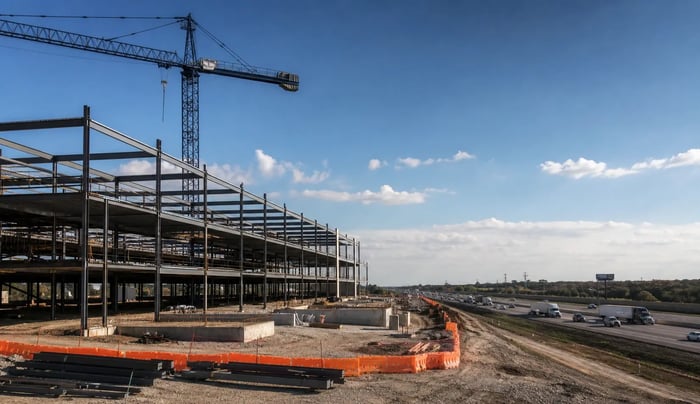
Builder's risk is the property policy for the building while it is being built. On a Texas project the construction contract decides whether the owner or the general contractor buys it, and lenders often set the limits. 4J Insurance Brokerage reviews projects of every size, from renovations to large commercial construction, and places them on project fit across more than one market.
Start with builder's risk insurance in Texas, check what your contract requires, or submit a project for review.

Built for general contractors, specialty trades and construction managers
Contract compliance is where contractors lose money without ever having a claim. The insurance can be correct and the certificate still wrong, and a wrong certificate stops payment. We read the contract first, then build the policy that satisfies it.
- Discover: We learn the trade, the work mix between commercial, residential and public projects, and the contracts you are being asked to sign.
- Audit: We compare the certificates you must produce against what the policy actually grants, and check the subcontractor certificate process.
- Position: We build a submission around trade, work at height, subcontractor use and loss history, and approach markets with appetite for that profile.
- Advise: We size umbrella limits to the contracts ahead of you and establish surety capacity before the bid schedule, not during it.
Contract, Coverage and Surety Architecture
Carrier appetite for contractors turns on trade, work mix, subcontractor use and loss history. Residential exposure, exterior insulation finishing systems, roofing, and work at height each move the placement to a different market. Every submission is prequalified against those factors before it is marketed. 4J Insurance is an independent commercial insurance brokerage, powered by PGI, based in Frisco, Texas.
The exposures that define a contractor program
- General liability with products and completed operations: construction-defect claims arrive years after the job closes
- Additional insured, ongoing and completed operations: on the specific forms the contract names
- Waiver of subrogation and primary, non-contributory wording: routinely required, frequently missing
- Builders risk: on projects where you carry the risk of the structure
- Tools, equipment and installation floater: property that moves between sites
- Commercial auto: including hired and non-owned
- Workers’ compensation: see the workers’ compensation hub
- Umbrella and excess liability: sized to contract requirements, not to habit
- Surety: bid, performance and payment bonds
The gaps we find most often
- Completed operations excluded when the contract explicitly requires it
- Additional insured granted on ongoing operations only, so coverage ends at substantial completion
- Residential, EIFS or roofing exclusions that gut the policy for the work actually being performed
- Subcontractor warranty clauses that void coverage when certificates were never collected
- Indemnity provisions demanding broader transfer than the endorsement grants
- Umbrella limits below the contract minimum, discovered at certificate time
Surety, and how capacity is actually underwritten
Bonding is a credit decision, not an insurance decision. Capacity is built from three things: financial statements and working capital, the character and track record of the principal, and work on hand relative to capacity. A surety looks at whether you can finish what you have already committed to before it considers what you want to bid next.
The practical consequence is timing. A contractor who establishes the relationship, submits clean financials and keeps work-on-hand reporting current can turn a bond in days. A contractor who calls the week of the bid is asking an underwriter to make a credit decision without a credit file. Availability, limits and terms depend on the account and the market.
Program architecture
- General liability with completed operations confirmed and the named additional-insured forms attached
- Builders risk on projects you control, with soft costs and delay considered where the contract exposes you
- Tools and equipment written to replacement cost
- Umbrella sized to the highest contract requirement you expect to sign, not the last one
- A subcontractor certificate process that runs before work starts, not at audit
- A surety relationship established ahead of the bid schedule
Not every coverage, endorsement or bond form is available on every account. Policy terms, conditions, limitations and exclusions apply, and bonding is subject to credit underwriting.
What underwriters actually look at
Trade and work description; split between commercial, residential and public work; percentage of work subcontracted; whether written subcontract agreements and certificates are collected; experience modifier and loss runs; work at height, excavation depth and hot-work controls; use of hired and non-owned auto; contract review practices; and financial capacity where surety is involved.
Who this is built for
- General contractors and construction managers
- Concrete, masonry, drywall and framing contractors
- Electrical, plumbing and mechanical trades
- Excavation, site work and utility contractors
- Roofing and exterior trades
- Specialty trades performing work on public projects requiring bonds
Related resources
- General liability insurance
- Texas surety bonds
- Workers’ compensation
- Commercial insurance overview
- Texas business insurance
- Contractors, Collin County
- Contractors, Denton County
- Surety bonds glossary
- Request a coverage audit
Vehicles in a contractor program
Trucks, trailers and equipment moving between jobsites sit outside general liability, which excludes auto liability by design. Crews driving their own vehicles to site create a non-owned exposure the company still answers for, and rented or borrowed units create a hired exposure with a separate physical damage election. Customer contracts frequently set an auto liability limit alongside the general liability limit, and reaching it usually means scheduling the auto policy under an umbrella. See commercial auto insurance for how owned, hired and non-owned coverage is structured, or call (469) 756-8776 to review a fleet and driver schedule.
FAQs to resolve before the renewal clock starts.
What insurance do Texas contractors need?
At minimum, general liability with products and completed operations, commercial auto including hired and non-owned, and workers compensation. Most contracts then require specific endorsements: additional insured on ongoing and completed operations, waiver of subrogation, and primary and non-contributory wording. Builders risk, tools and equipment coverage, umbrella limits and surety bonds are added according to the work performed and the contracts signed.
What is an additional insured endorsement?
It extends your liability coverage to another party, usually the project owner or the general contractor above you. Form versions differ materially. Some grant coverage on ongoing operations only and end at substantial completion, which is exactly when construction defect claims appear. If the contract names a form number, the policy needs that form.
Why does completed operations coverage matter so much for contractors?
Because construction defect claims usually arrive after the job is finished. Completed operations is the part of general liability that responds once your work is complete and out of your control. A policy that excludes or sub-limits it leaves the contractor exposed during the exact period most claims are filed.
What is builders risk insurance and who buys it?
Builders risk covers the structure under construction, including materials and fixtures intended to become part of the building, against physical loss during the work. Whether the owner or the contractor buys it is normally specified in the contract. It is separate from general liability, which covers injury and damage to others.
How is surety bonding capacity determined?
Bonding is a credit decision. Sureties evaluate financial statements and working capital, the track record and character of the principal, and work on hand relative to capacity. The question is whether you can complete what you have already committed to before they consider new work.
How far in advance should a contractor set up bonding?
Before the bid you need it for. A contractor with an established relationship, current financials and accurate work-on-hand reporting can often turn a bond in days. Starting the week of the bid asks a surety to make a credit decision with no credit file.
What happens if a subcontractor certificate was never collected?
Many contractor policies contain a subcontractor warranty requiring written agreements and certificates of insurance from every sub. If those were not collected, the carrier may reduce or deny coverage for claims arising from that subcontractor’s work, and the premium audit may reclassify the sub’s payroll as yours.
Do contractors need an umbrella policy?
Usually, because contracts require it. The practical failure is sizing: umbrella limits set from habit rather than from the highest contract minimum a contractor expects to sign. That mismatch is normally discovered at certificate time, when the job is already awarded.
What are the most common contractor coverage exclusions?
Residential work exclusions, exterior insulation finishing system exclusions, roofing and work-at-height restrictions, subsidence and earth movement exclusions, and contractual liability limitations. Each one can remove coverage for the work a contractor actually performs, so they are checked against the trade before the policy is bound.
What does the coverage audit involve for a contractor?
We read the contracts you are signing, the current policies, the certificates you are being asked to produce, the subcontractor process, and the loss history. The output is a written list of where the contract requirements and the policy language do not line up, and what it would take to close each gap.
Read the contract before the certificate is due
Can your policy actually produce the endorsements your next contract requires?
Back up
Related coverage
-
Fraudulent payment instructions
Worked examples including social engineering and funds transfer.
-
Bonding to win the contract
Surety as a contract prerequisite rather than an insurance product.
-
Trucks, trailers and severe auto losses
Fleet exposure is part of running a construction business.
-
Crews on site
Workers compensation and the experience modifier.
Next step
-
Request a coverage audit →
Send the declarations pages. You get a written gap summary.