.png?width=500&height=136&name=4J%20commercial%20insurance%20broker%5B1%5D%20(1).png)
Texas Manufacturing & Product Risk
A manufacturer’s worst loss is rarely the building. It is the product that already shipped.
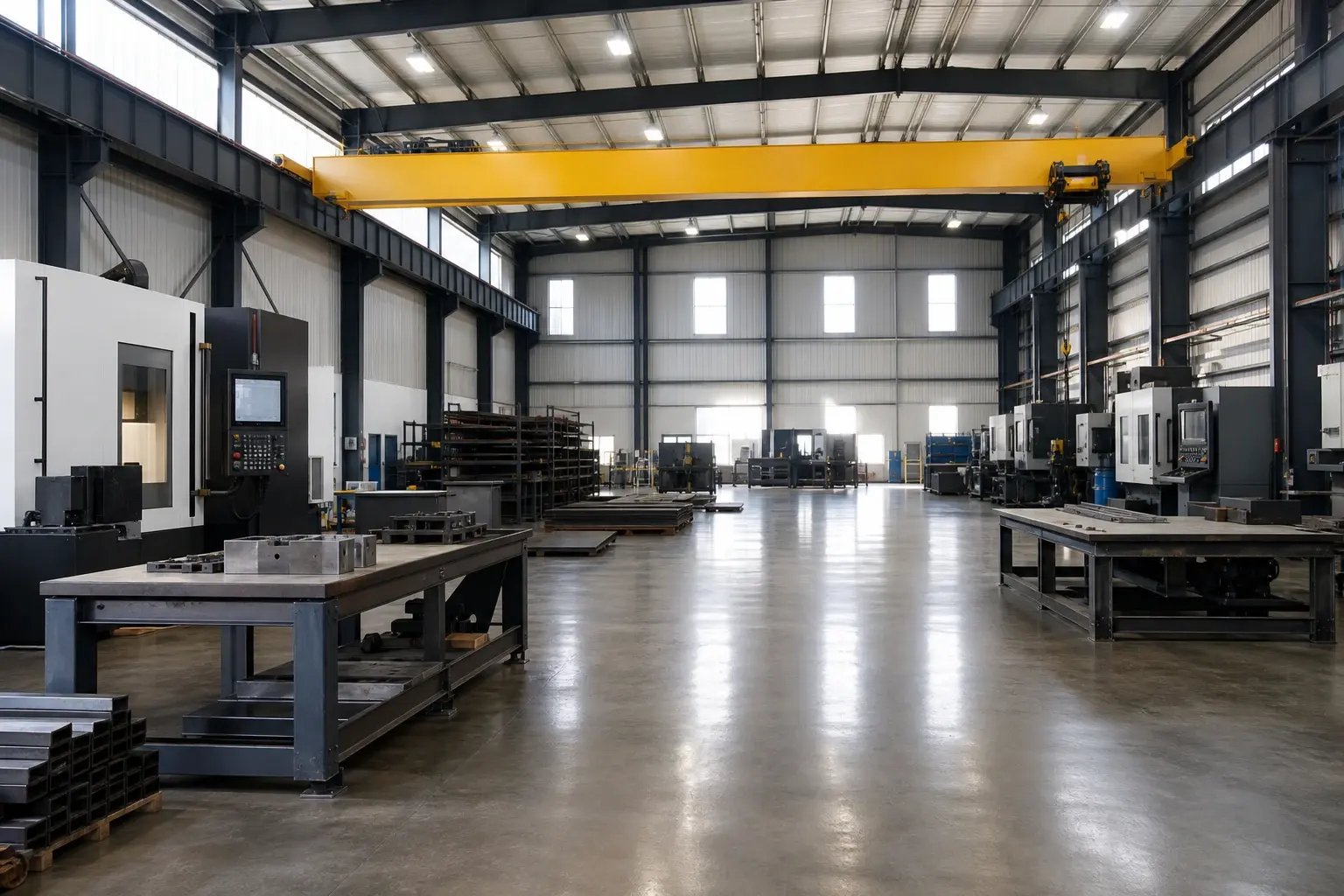
Texas manufacturing runs from metal fabrication and machine shops to electronics assembly and food processing, and each carries a different claim profile. 4J Insurance Brokerage, an independent commercial insurance brokerage in Frisco, Texas, builds manufacturing programs around what actually leaves your dock: the product liability tail, the recall exposure, the equipment whose failure stops revenue, and the contracts that quietly move someone else’s risk onto your policy.
- Products and completed operations confirmed, not assumed — the coverage most manufacturing policies get wrong
- Business interruption written to a realistic restoration period for long-lead machinery
- Customer contracts read before the policy is marketed, so the endorsements match what you signed
What insurance do Texas manufacturers need?
A manufacturing insurance program is built from four pillars: general liability with confirmed products and completed operations coverage, commercial property written on replacement cost, equipment breakdown, and business interruption with a restoration period long enough to actually replace the machinery. Depending on the operation, recall expense, contingent business interruption, spoilage, cyber, commercial auto and workers’ compensation are layered on top. The right combination depends on what you make, who you sell it to, and what your customer contracts require of you. For shops on the west side of the metroplex, our Tarrant County business insurance page covers the aerospace-supply-chain and Alliance-corridor exposures specific to Fort Worth operations.
What is products and completed operations coverage?
Products and completed operations covers bodily injury or property damage caused by your product after it has left your premises and is no longer in your control. For a manufacturer this is usually the single most important part of the general liability policy, because the worst loss is rarely the building — it is the component already installed in a customer’s assembly. It should be confirmed as included, not excluded and not quietly sub-limited.
Does general liability cover a product recall?
Generally no. Standard general liability responds to injury or damage your product causes. It does not pay to find, recover, replace or destroy the product itself. Recall and withdrawal expense is normally a separate purchase, and the limits available depend on the industry, the distribution model and the loss history.
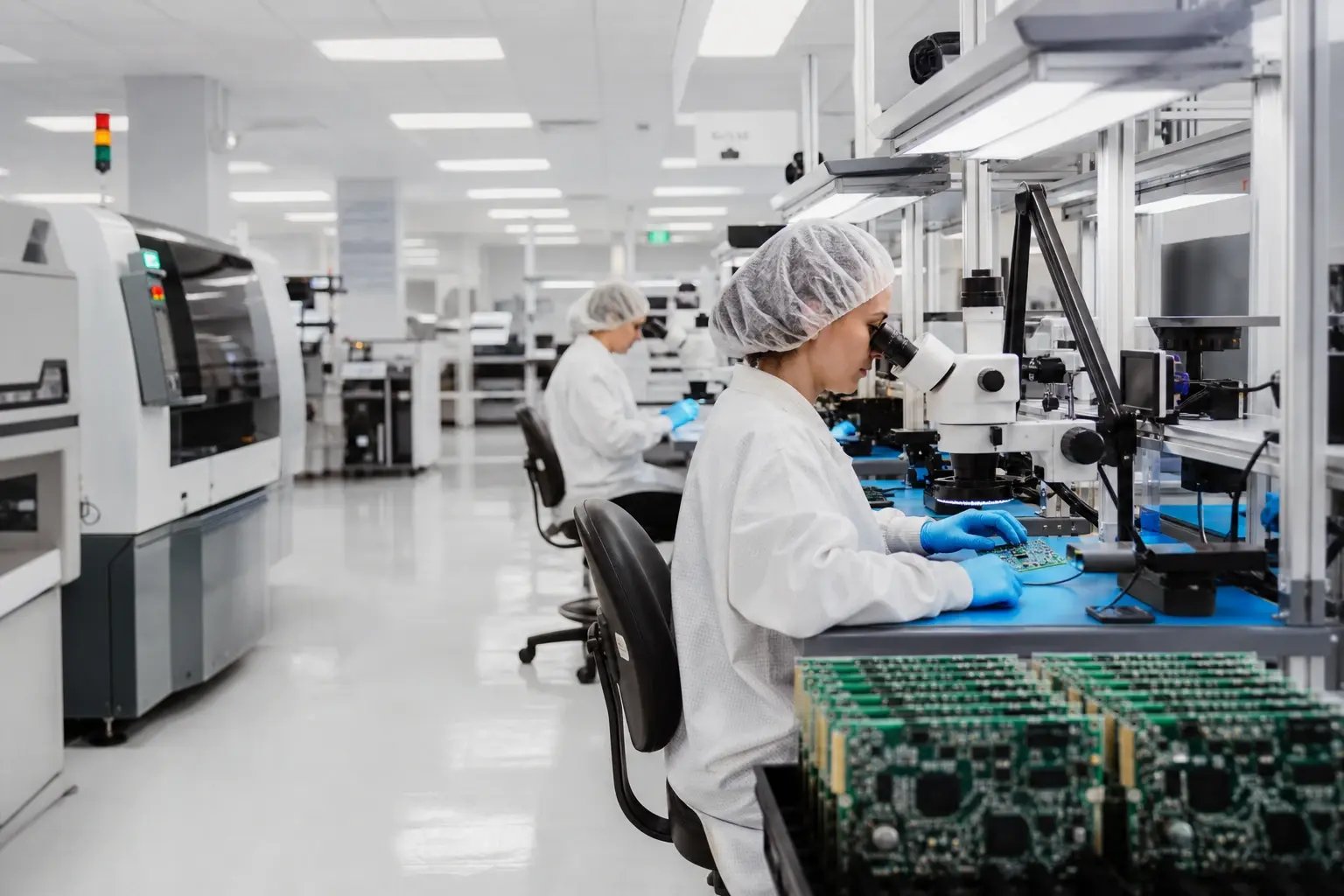
Built for fabricators, machine shops, assemblers and contract producers
A manufacturing program has to separate three different things that most policies blur together: the plant, the process, and the product. The plant is a property and business-interruption problem. The process is an equipment-breakdown and contingent-supply problem. The product is a liability problem that outlives the sale by years.
- Discover: We learn what you make, who uses it, how it is distributed, and what your customer contracts already obligate you to carry.
- Audit: We review the policies, the equipment and property valuations, the loss history, and the hold-harmless and indemnity language in your contracts.
- Position: We build an underwriting narrative around product line, end use, quality control, and loss-control measures, then approach markets with appetite for that profile.
- Advise: We compare more than premium and explain the practical consequences of limits, sub-limits, restoration periods, exclusions, and completed-operations wording.
Manufacturing Risk Architecture
Carrier appetite in manufacturing turns on what you make and who ends up using it. A machine shop producing non-critical brackets and a shop producing safety-critical aerospace components look identical on a walk-through and completely different to an underwriter. Every submission is prequalified against that reality before it goes to market. 4J Insurance is an independent commercial insurance brokerage, powered by PGI, based in Frisco, Texas.
The exposures that define a manufacturing program
- Products and completed operations — the liability tail on everything already shipped
- Recall and withdrawal expense — the cost of getting it back, almost never covered by general liability
- Equipment breakdown — mechanical and electrical failure, which commercial property excludes
- Business interruption — lost income during a restoration period that has to match real lead times
- Contingent business interruption — a sole-source supplier’s loss becoming your loss
- Spoilage and stock valuation — how raw, work-in-process and finished goods are valued at the moment of loss
- Cyber — networked production systems, CAD and design files, and funds-transfer fraud
- Commercial auto and workers’ compensation — delivery fleets and a workforce around moving machinery
The gaps we find most often
- Completed operations excluded outright, or sub-limited well below the general liability limit
- Recall assumed to be covered when it is a separate purchase that was never made
- Business interruption written on a ninety-day restoration period for machinery with a twelve-month lead time
- Property limits set at book value rather than replacement cost, so a total loss rebuilds at a discount
- Additional-insured status promised in a customer contract that the policy does not actually grant
- No contingent business interruption despite a single supplier controlling a critical input
What a claim actually looks like
The claims that hurt manufacturers are rarely the fire. They are a defective component discovered three tiers downstream after ten thousand units shipped; a press failure that idles a line while the replacement is built to order; a customer contract that required additional-insured status on completed operations, which the certificate did not grant, leaving the manufacturer funding its own defense.
Program architecture
- General liability with products and completed operations confirmed in writing, not assumed from the declarations page
- Commercial property on replacement cost, with agreed value where the valuation supports it
- Equipment breakdown covering the machinery revenue actually depends on
- Business interruption with a restoration period built from real replacement lead times, not a default
- Recall and withdrawal expense where the product and distribution model justify it
- Contingent business interruption where supply is concentrated
- Cyber including funds-transfer fraud and production-system interruption
- The specific additional-insured and waiver-of-subrogation forms your customer contracts name
Not every coverage or extension is available on every account. Policy terms, conditions, limitations and exclusions apply.
What underwriters actually look at
Product line and end use; sales split by product; distribution channel; whether you manufacture to your own design or a customer specification; quality control and testing documentation; hold-harmless and indemnity language in customer contracts; prior product claims; sprinkler and fire protection; dust and combustible-material controls; machine guarding; experience modifier; and the basis on which property values were set. A submission that answers those before an underwriter asks is marketed from a position of strength.
Who this is built for
- Metal fabricators and machine shops
- Electronics and printed-circuit-board assemblers
- Food and beverage processors
- Plastics and injection molders
- Industrial equipment and machinery builders
- Contract manufacturers and private-label producers
- Manufacturers who also install what they build
Explore the manufacturing ecosystem
- Manufacturing Resource Center — the gateway to everything below
- Operations — where each operation assumes responsibility in the product lifecycle
- Coverage — how one event triggers several policies at once
- Risk management — Texas non-subscription, machine guarding and energy control
- Industry 4.0 — operational technology, control systems and connected products
- Manufacturing glossary — 16 terms defined
Related resources
- Commercial insurance overview
- Texas business insurance
- General liability insurance
- Cyber and technology risk
- Electronics manufacturing, Collin County · Collin County metal manufacturing
- Machine shops, Denton County
- Commercial insurance glossary
- talk to a broker
Vehicles in a manufacturing program
Delivery trucks, sales vehicles and yard units are owned auto exposures, and the boundary between a titled vehicle and mobile equipment decides whether a loss is answered by the auto policy or by general liability. Employees driving their own cars to suppliers or customers create a non-owned exposure, and rented units during peak season create a hired exposure with a separate physical damage election. Customer and distribution contracts often specify auto liability limits. See commercial auto insurance, or call (469) 756-8776 to review the vehicle and driver schedule.
FAQs to resolve before the renewal clock starts.
What is products-completed operations coverage?
Products-completed operations covers bodily injury or property damage caused by your product after it has left your premises and is no longer in your control. For a manufacturer this is usually the most important part of the general liability policy, because the worst loss is rarely the building. It is the component already installed in a customer assembly. Confirm it is included and not excluded or sub-limited.
Does general liability cover a product recall?
Generally no. Standard general liability responds to injury or damage the product causes, not to the cost of recovering, replacing, or destroying the product itself. Recall and withdrawal expense is normally a separate purchase, and the limits available depend on the industry, distribution model, and loss history.
How is business interruption calculated for a manufacturer?
Business interruption is based on lost net income plus continuing expenses during the period of restoration. The failure point for manufacturers is the restoration period itself. If a critical press or CNC machine has a twelve month lead time and the policy assumes a ninety day restoration, the coverage stops paying while the plant is still down.
What is contingent business interruption?
Contingent business interruption addresses loss to your operation arising from an event at a dependent property — a supplier, customer, or contributing or recipient location. The dependent property must generally sustain covered physical loss or damage, or satisfy whatever alternative trigger the specific form provides. A supplier simply having difficulty is usually not enough. Whether the coverage responds also commonly depends on whether that location was scheduled, and single-source suppliers frequently are not.
Should a manufacturer carry equipment breakdown coverage?
If revenue depends on machinery, it warrants close review. Commercial property forms commonly exclude direct loss caused by mechanical or electrical breakdown, although resulting-loss provisions and endorsements vary. Equipment breakdown coverage is designed to address exposures the property form may not — a transformer failure, motor burnout or boiler loss — and on a long-lead machine the income consequence usually exceeds the repair cost.
Do manufacturers need cyber insurance?
Increasingly yes. Networked production systems, CAD and design files, ERP platforms, and funds-transfer processes are all exposed. The two most common manufacturing cyber losses are ransomware that halts production and social-engineering fraud that redirects a supplier payment.
What do underwriters look at on a manufacturing submission?
Product line and end use, sales split by product, distribution channel, whether you manufacture to your own design or a customer specification, quality control and testing documentation, hold-harmless and indemnity language in customer contracts, prior product claims, sprinkler and fire protection, dust and combustible material controls, machine guarding, experience modifier, and property valuation basis.
What changes if a manufacturer also installs its product?
Yes, though it changes the risk profile. Installation work introduces contractor exposures, additional-insured requirements, and completed-operations questions that a pure manufacturing policy may not contemplate. The program needs to be written for both activities rather than one.
Before the next contract requires a certificate you cannot produce
Is your manufacturing program built around the product, or around the building?
Back up
Related coverage
-
When cyber risk reaches the plant floor
Covers operational technology exposure, not only office systems.
-
What a ransomware shutdown looks like
Worked examples including ransomware, vendor compromise and business interruption.
-
Protecting the workforce
The other way a production line stops.
-
Keeping skilled people
Benefits strategy as a retention lever in a tight machining labour market.
Next step
-
Request a coverage audit →
Send the declarations pages. You get a written gap summary.